
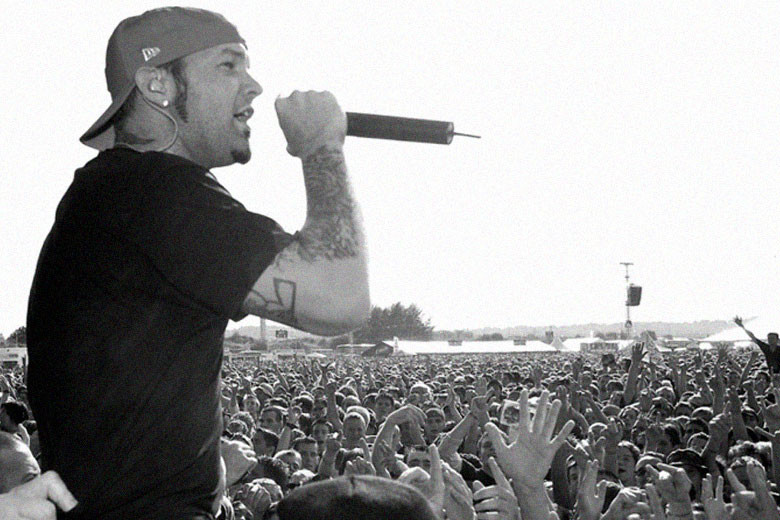
Click HERE for our Nu-Metal collection
Nu-metal, a genre that exploded in the mid-1990s, forever changed the landscape of heavy music. Fusing the intensity of metal with the rhythmic beats of hip-hop, nu-metal became the voice of a disillusioned generation. At a time when the world was grappling with political, social, and economic unrest, nu-metal emerged as a powerful outlet for anger, frustration, and rebellion. Bands like Korn, Deftones, Limp Bizkit, Slipknot, Rage Against The Machine, System of a Down and Linkin Park became the leaders of this movement, each bringing their own distinct sound and message to the genre.
At Eyesore Merch, we celebrate nu-metal's influence with official merch from the bands that defined this era. This blog explores the history of nu-metal, its cultural impact, and the key albums, gigs, and festivals that shaped the genre.
The Birth of Nu-Metal: A Reaction to Changing Times
Nu-metal's emergence in the early 1990s can be traced to a period of significant societal change. The end of the Cold War left many feeling uncertain about the future, while political corruption, corporate greed, and rising inequality dominated global headlines. Young people, struggling to find their place in a fractured world, turned to music for a voice that echoed their frustrations. Grunge had offered a bleak, introspective view of life, but nu-metal amped up the aggression and intensity, mixing metal's ferocity with the groove of hip-hop.
Nu-metal bands fused elements of metal, rap, funk, and electronic music, creating a genre that was raw, emotionally charged, and unrelentingly heavy. Rejecting the flashy excesses of 1980s glam metal, these bands embraced a gritty, streetwise authenticity that resonated deeply with fans. What made nu-metal stand out was its willingness to confront issues like mental health, personal trauma, and societal inequality, giving a voice to the voiceless.
The Key Bands That Defined Nu-Metal
Several key bands played a vital role in shaping nu-metal. Each brought their unique influences, style, and social commentary to the genre, helping to shape the sound and culture of the movement.
Korn: The Birth of Nu-Metal
Few bands are as synonymous with the birth of nu-metal as Korn. Emerging from Bakersfield, California, in the early 1990s, Korn pioneered a sound that blended downtuned, percussive guitars, hip-hop-inspired rhythms, and raw, confessional lyrics. Frontman Jonathan Davis became a defining voice of adolescent angst, channeling themes of alienation, abuse, and inner turmoil into visceral performances that resonated with fans worldwide.
Their self-titled debut album in 1994 introduced a new approach to metal. Tracks like “Blind” showcased their signature sludgy, seven-string guitar riffs, slap bass, and Davis’s unique vocal style—alternating between whispers, screams, and rap-like cadences. With follow-ups like Life Is Peachy and Follow the Leader, Korn solidified nu-metal’s identity, influencing countless bands that blended metal, hip-hop, and alternative rock.
A key moment in their career came with the 1998 release of Follow the Leader, which debuted at number one on the Billboard 200 and brought nu-metal into mainstream consciousness. The album’s mix of heavy grooves, catchy hooks, and experimental production helped define the genre’s template and showcased Korn as its standard-bearers. The following year, Korn's performance at Woodstock ’99 became a defining event for the nu-metal scene, with their intense live show energizing a massive crowd.
Nu-metal itself drew from diverse influences—metal, funk, hip-hop, and industrial—but Korn’s aggressive, emotionally charged approach gave the genre its darkest, most personal edge. While the commercial wave of nu-metal would peak and fade in the early 2000s, Korn’s influence endures, both as innovators of the genre and as pioneers of a sound that gave voice to a generation of frustrated, restless youth.
For a deeper dive into Korn’s legacy, check out our Korn blog post.
Click HERE for our Korn collection
Deftones: The Atmospheric Edge of Nu-Metal
While nu-metal in the late 1990s often thrived on aggression and rap-metal hooks, Deftones carved out a more atmospheric, experimental niche within the genre. Formed in Sacramento, California, the band combined heavy, downtuned riffs with ethereal textures, shoegaze-inspired melodies, and the emotive vocals of frontman Chino Moreno, creating a sound that was simultaneously brutal and beautiful.
Their 1997 album Around the Fur established them as a key force in the nu-metal scene, with tracks that balanced aggression, melody, and sonic experimentation. With follow-up albums like White Pony, Deftones expanded their sound further, incorporating electronic elements, layered guitars, and introspective lyrics. White Pony was critically acclaimed and is often cited as one of the genre’s most innovative releases, earning the band a Grammy Award for Best Metal Performance for the track “Elite.”
Unlike some of their nu-metal contemporaries, Deftones avoided overt commercial gimmicks, favoring complex arrangements and a dynamic range that could shift from whisper-quiet vulnerability to crushing intensity. Their style influenced both the nu-metal and alternative metal movements, appealing to fans who sought emotional depth alongside heaviness.
Though nu-metal’s mainstream dominance waned in the mid-2000s, Deftones remained a vital, evolving presence, bridging the gap between aggressive metal and experimental rock. Their ability to blend heaviness with atmosphere has secured their legacy as one of the most artistically respected bands to emerge from the nu-metal era.
For more on Deftones’ career and impact, check out our Deftones blog post.
Click HERE for our Deftones collection
Limp Bizkit: Red Caps, Chaos and the Soundtrack of a Generation
In the late 1990s, few bands embodied the raw, chaotic energy of nu-metal quite like Limp Bizkit. Emerging from Jacksonville, Florida, the band fused heavy metal riffs with hip-hop rhythms, turntable scratches, and an aggressive, confrontational attitude that captured the angst of a generation on the edge of the new millennium.
Fronted by the outspoken Fred Durst, alongside guitarist Wes Borland, Limp Bizkit broke into the mainstream with their 1999 album Significant Other. The record spawned massive hits like “Nookie” and “Break Stuff,” blending rap-influenced vocals with crushing guitar work and DJ Lethal’s scratching. Their follow-up, Chocolate Starfish and the Hot Dog Flavored Water, debuted at number one on the Billboard 200 and cemented the band’s status as one of the most commercially successful acts of the era.
One of the most pivotal—and controversial—moments in Limp Bizkit’s career came during their performance at Woodstock 1999. As tensions rose in the crowd amid reports of fires and unrest, the band’s performance of “Break Stuff” became emblematic of the festival’s chaos. While debates continue about the group’s role in the event’s escalation, the moment crystallized both their immense cultural influence and the volatile energy associated with late-’90s nu-metal.
Click HERE for our Limp Bizkit collection
Slipknot: Masks, Mayhem and Intensity
Few bands embodied the raw intensity of nu-metal quite like Slipknot. Formed in Des Moines, Iowa, in 1995, Slipknot took the genre to new extremes with their nine-member lineup, each member sporting terrifying masks. They combined downtuned guitars, thunderous percussion, turntables, and visceral vocals from frontman Corey Taylor, creating a sonic onslaught that became emblematic of late-1990s and early-2000s metal.
Slipknot’s 1999 self-titled debut album introduced the world to their masked personas and extreme intensity. Tracks like “Wait and Bleed” and “Spit It Out” mixed nu-metal groove with hardcore aggression, earning the band both a devoted fanbase and mainstream recognition. Their follow-up, Iowa, pushed the boundaries further with darker, heavier compositions, cementing their reputation as one of the most intense acts in the genre.
A defining moment for Slipknot came at the 2001 Ozzfest, where their chaotic stage presence and masked aesthetic helped solidify nu-metal’s reputation for extreme performances. Their combination of music, theatricality, and visual identity made them both controversial and unforgettable, influencing countless bands that followed.
Even as nu-metal’s mainstream popularity declined, Slipknot remained a defining force, bridging extreme metal and mainstream rock while maintaining the raw energy that first made them stand out.
To learn more about Slipknot’s rise to fame, visit our Slipknot blog post.
Click HERE for our Slipknot collection
Rage Against The Machine: Revolutionaries of Rap Metal and Political Protest
Rage Against The Machine (RATM) was a precursor to nu-metal and one of the most politically charged bands of the 1990s. Formed in Los Angeles, California in 1991, RATM blended metal’s aggression with the rhythmic intensity of hip-hop, setting the stage for the nu-metal explosion. With their unapologetically political lyrics, RATM tackled issues of systemic oppression, government corruption, and corporate greed. Songs like "Killing in the Name" and "Bulls on Parade" became anthems for resistance, and the band used their music to raise awareness about global injustices.
Their debut album, Rage Against The Machine (1992), remains a revolutionary mix of heavy riffs, rap vocals, and socially conscious lyrics. Tracks like "Killing in the Name" and "Bombtrack" expressed the anger of a generation, making RATM one of the most influential bands of the era. Follow-up albums like Evil Empire (1996) and The Battle of Los Angeles (1999) continued to push the envelope, combining music with activism in a way that few bands had done before. RATM’s performance outside the Democratic National Convention in 2000 was a powerful political statement, drawing thousands of protestors and cementing their reputation as a band that wasn’t afraid to take action for social change.
Although Rage Against the Machine predates the nu-metal boom, their influence on the genre’s musical and cultural DNA is undeniable. By merging rap, metal, and social commentary, they helped create the sonic palette and rebellious ethos that would define nu-metal in the late 1990s and early 2000s.
For more on Rage Against The Machine’s contribution to nu-metal and activism, check out our Rage Against The Machine blog post.
Click HERE for our RATM collection
System of a Down: Unorthodox Fury and Political Firebrands
System of a Down emerged from Los Angeles, California in the mid-1990s, bringing a uniquely chaotic and politically charged approach to the nu-metal scene. With Serj Tankian’s soaring, operatic vocals, Daron Malakian’s angular riffs, and a rhythm section capable of sudden, unpredictable shifts, the band fused metal, punk, Armenian folk influences, and alternative rock into a style that was as aggressive as it was unconventional.
Their 1998 debut album, System of a Down, and the follow-up Toxicity cemented their place in the nu-metal era. Toxicity produced hits like “Chop Suey!” and “Toxicity,” blending heavy riffs, sudden tempo changes, and socially conscious lyrics addressing corruption, war, and personal struggle. The band’s unpredictable sound and theatrical performances set them apart from many of their contemporaries while still embracing the groove-oriented intensity of nu-metal.
A defining moment came with Toxicity debuting at number one on the Billboard 200 in 2001, a testament to the band’s ability to push musical boundaries while achieving mainstream success. Their approach inspired other bands to experiment beyond the traditional nu-metal formula, proving that aggression and accessibility could coexist with innovation and political messaging.
System of a Down’s fusion of technical musicianship, unconventional structures, and socio-political awareness helped expand the scope of nu-metal. While they shared the genre’s emphasis on heaviness and rhythm, their willingness to challenge norms ensured their lasting influence as one of the most distinctive voices of the era.
For a deeper look at System of a Down’s career, read our System of a Down blog post.
Click HERE for our System of a Down collection
Linkin Park: Screams, Synths and Melodic Anguish
Linkin Park became one of the most commercially successful and defining acts of nu-metal, blending heavy guitar riffs, rap verses, electronic elements, and melodic choruses into a polished yet emotionally raw sound. Formed in Agoura Hills, California, the band featured Chester Bennington’s soaring, emotional singing alongside Mike Shinoda’s rapped verses, creating a dynamic contrast that became their signature.
Their 2000 debut album, Hybrid Theory, was a breakthrough for nu-metal, producing hits like “One Step Closer”, “In the End” and “Crawling” that combined introspective lyrics with hard-hitting beats and electronic textures. The album’s success brought nu-metal into mainstream consciousness, appealing to fans of both rock and hip-hop.
A pivotal moment in Linkin Park’s career came with the release of Meteora, which debuted at number one on the Billboard 200 and solidified the band’s reputation as leaders of the genre. Tracks like “Numb” and “Breaking the Habit” showcased their ability to blend personal, emotional themes with heavy yet accessible production, expanding nu-metal’s appeal.
Unlike some contemporaries, Linkin Park embraced melody and electronic experimentation while retaining the aggressive, rhythmic core of nu-metal. Their innovative approach helped the genre evolve and endure, influencing countless artists and cementing their legacy as one of nu-metal’s most impactful and enduring bands.
To explore Linkin Park’s influence on nu-metal, visit our Linkin Park blog post.
Click HERE for our Linkin Park collection
Key Events That Shaped the Nu-Metal Scene
- Woodstock ’99 – The festival is often remembered for the chaos and riots that ensued, but it also became a defining moment for nu-metal, with bands like Korn and Limp Bizkit delivering powerful performances that embodied the aggression and raw energy of the genre.
- Ozzfest – The Ozzfest tours of the late '90s and early 2000s brought nu-metal to a global audience. With Slipknot, Disturbed, and Korn dominating the lineup, Ozzfest introduced nu-metal to new fans and solidified its place in the metal world.
- Projekt Revolution – Launched by Linkin Park in 2002, Projekt Revolution brought together nu-metal, hip-hop, and alternative rock artists, further expanding the genre’s reach and influence.
- Family Values Tour – Organized by Korn, the Family Values Tour became one of the most important touring festivals for nu-metal, featuring performances by bands like Korn, Limp Bizkit, Staind and Rammstein.
The Legacy of Nu-Metal
Though nu-metal’s mainstream popularity declined in the mid-2000s, its influence on modern metal and alternative music remains strong. The genre broke down the barriers between metal, hip-hop, and electronic music, and its fusion of styles can still be heard in today’s music. Many of the key bands that defined nu-metal—like Korn, Slipknot, and Deftones—have continued to evolve, remaining some of the most respected names in heavy music.