
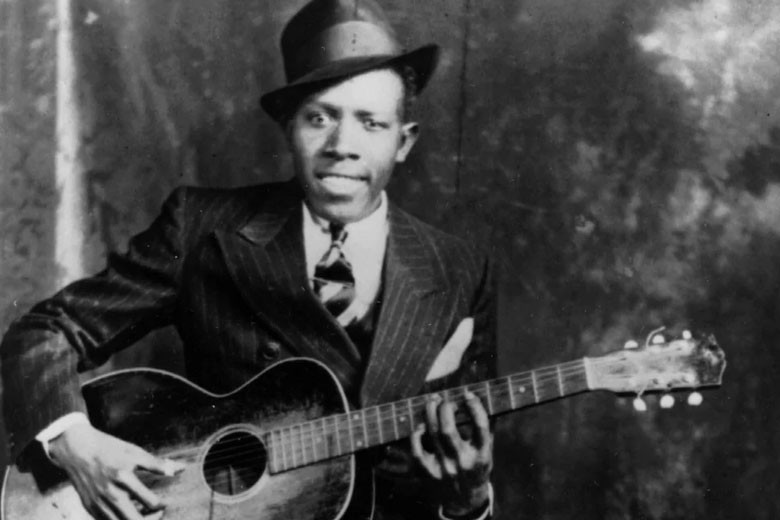
Robert Johnson: The King of the Delta Blues and Father of Modern Rock
Robert Johnson is one of the most influential figures in the history of blues music. Known as the "King of the Delta Blues", Johnson's guitar work, haunting lyrics, and legendary mystique have made him a pivotal figure in the development of not only blues, but rock music as a whole. With just a handful of recorded songs to his name, Johnson left a mark on music that is still deeply felt today, inspiring generations of musicians and shaping the very foundation of modern rock.
In this post, we’ll explore Johnson’s musical journey, his influence on blues and rock, and the legendary story of his life that has cemented him as a mythical figure in American music.
Early Life and Love for the Blues
Robert Johnson was born in Hazlehurst, Mississippi in 1911. Growing up in the Mississippi Delta, he was surrounded by the sounds of blues musicians who played in local juke joints and on street corners. From an early age, Johnson was captivated by the music, drawn to the raw emotion and storytelling that the blues offered. He began playing guitar in his teens, and though his early attempts were met with limited success, Johnson’s passion for music continued to grow.
The Delta blues tradition, rooted in African American spirituals and work songs, had a profound impact on Johnson’s musical style. Early blues musicians like Son House and Charley Patton served as his primary inspirations, influencing both his guitar technique and his deep, soulful voice. Johnson absorbed these influences, incorporating their unique rhythms and chord progressions into his own sound.
The Legend of the Crossroads
One of the most enduring stories about Robert Johnson is the myth of the crossroads. According to legend, Johnson gained his extraordinary guitar skills by selling his soul to the devil at a crossroads in exchange for musical mastery. This tale was perpetuated by the fact that Johnson’s talent seemed to appear overnight; after disappearing from the music scene for a brief period, he returned with an impressive level of skill that astonished his contemporaries.
The legend of the crossroads added to Johnson’s mystique and has become a significant part of his legacy. Songs like "Cross Road Blues" and "Hellhound on My Trail" only fueled the myth, as they spoke of longing, loss, and supernatural forces. Whether the tale of the crossroads is true or not, it underscores Johnson’s dedication to his craft and his willingness to immerse himself in the emotional depths that would become hallmarks of his music.
Musical Style and Inspirations: A Unique Sound
Robert Johnson’s guitar technique was both innovative and complex. Influenced by the Delta blues style, he developed a way of playing that allowed him to create the illusion of multiple guitars, using fingerpicking techniques and intricate slide work. His mastery of the guitar set him apart from his peers, and his songs were laced with a depth and intensity that brought the listener into the heart of his experiences.
Johnson’s lyrical themes often revolved around heartache, betrayal, and hardship, but his music was also filled with vivid storytelling. He drew inspiration from blues pioneers like Blind Lemon Jefferson and Skip James, blending their influences with his own personal style to create songs that were raw, haunting, and deeply emotive.
One of Johnson’s unique traits was his ability to convey the human experience through a lens of hardship and resilience. His voice, often described as ethereal, could express both sorrow and defiance, capturing the spirit of the blues in a way few artists have matched. Songs like "Love in Vain" and "Sweet Home Chicago" exemplify his style, combining skillful guitar work with lyrics that speak to universal emotions.
Iconic Recordings: Capturing the Delta Blues
Robert Johnson’s recording sessions took place in San Antonio and Dallas in 1936 and 1937, resulting in 29 songs that would come to define his legacy. These recordings, including "Terraplane Blues," "Come On in My Kitchen," and "Ramblin' on My Mind," capture the essence of Johnson’s style and have become some of the most revered songs in blues history.
"Terraplane Blues," Johnson’s first release, became his only hit during his lifetime. The song’s automotive metaphor, referring to a car model known as the Terraplane, was used to explore themes of love and betrayal—a common approach in blues lyrics. This kind of storytelling, full of metaphor and double entendre, was characteristic of Johnson’s work, allowing him to convey complex emotions in a way that felt deeply personal yet universally relatable.
Johnson’s recording of "Cross Road Blues" is perhaps his most famous song, its legacy tied to both the myth of the crossroads and the haunting, raw emotion that Johnson brought to his music. His recordings are sparse but powerful, a testament to his skill as both a guitarist and a storyteller.
Legacy and Influence: Shaping Blues and Rock Music
Despite his untimely death at the age of 27, Robert Johnson’s influence on music is monumental. His recordings were rediscovered by a new generation in the 1960s, when artists like Eric Clapton, Keith Richards, and Bob Dylan became captivated by his sound. Clapton, in particular, was profoundly influenced by Johnson, often calling him "the most important blues musician who ever lived." Johnson’s music became a blueprint for the British blues movement, and his influence extended into rock, inspiring countless artists and shaping the sound of the genre.
The Rolling Stones, Led Zeppelin, Fleetwood Mac, and Cream all drew from Johnson’s music, covering his songs and incorporating his techniques into their own work. His approach to slide guitar, open tunings, and fingerpicking became essential elements in rock music, creating a bridge between the blues and rock worlds. Johnson’s ability to capture intense emotion and tell stories through music resonated with these musicians, many of whom incorporated his songs into their repertoires.
In addition to rock musicians, Johnson’s work has had a profound impact on blues artists across the decades. Musicians like Muddy Waters, Howlin’ Wolf, and John Lee Hooker carried forward his influence, building upon his style and expanding the reach of blues music. Johnson’s impact on these artists helped shape the sound of post-war blues and introduced the Delta blues tradition to a broader audience.
The Enduring Mystique of Robert Johnson
Robert Johnson’s legacy is inseparable from his mystique. His music, life, and the myth surrounding him have cemented his place as a mythical figure in American music history. Johnson's life remains shrouded in mystery, with little documentation and only a few photos in existence. This scarcity has fueled the intrigue around him, making him one of the most fascinating figures in music.
The combination of Johnson’s limited discography, extraordinary talent, and the legends surrounding his life has created a lasting impact. Today, his recordings continue to inspire musicians, and his influence can be felt across genres, from blues and rock to jazz and country.
Robert Johnson’s Lasting Legacy
Robert Johnson’s contribution to music extends far beyond the 29 songs he left behind. As the "King of the Delta Blues", his innovative guitar work, soulful vocals, and ability to tell deeply personal stories through music laid the foundation for countless artists. His legacy is a testament to the enduring power of blues music and its ability to convey the human experience in all its complexity.
Today, Johnson is celebrated not only as a blues musician but as one of the founding fathers of rock and roll. His music continues to reach new audiences, bridging the gap between past and present. For any fan of the blues or rock, Johnson’s work offers an essential glimpse into the origins of modern music—a reminder of the depth and emotion that blues can convey and a testament to his status as a true musical legend.
Robert Johnson’s story is one of passion, creativity, and resilience, and his impact on music is as powerful today as it was when he first picked up a guitar. His songs remain a testament to the strength of the Delta blues, carrying forward a legacy that has shaped the sound of music for generations.