
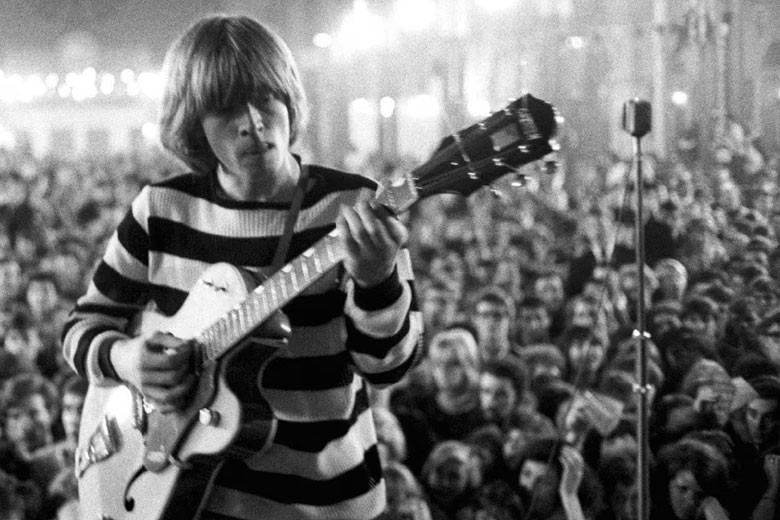
Brian Jones: The Multi-Instrumental Genius and Original Rolling Stone
Brian Jones was a visionary musician whose immense talent and innovative spirit helped shape the sound of one of the greatest rock bands in history, The Rolling Stones. As the founding member of the Stones, Jones was instrumental in crafting their early sound and bringing a unique, eclectic edge to their music with his mastery of multiple instruments. Although his life was tragically brief, his contributions to music and his impact on the Rolling Stones are undeniable, marking him as one of rock’s most influential and enigmatic figures.
In this post, we’ll explore Jones’s musical journey, his influence on the Stones’ distinctive sound, and his legacy as a multi-instrumentalist who left an indelible mark on rock and roll.
Early Life and Passion for Music
Brian Jones was born Lewis Brian Hopkin Jones in Cheltenham, England, in 1942. Raised in a musical household, he learned to play the piano and clarinet from a young age, showing a natural talent and passion for music. Jones was particularly drawn to jazz and blues, genres that would deeply influence his future musical endeavours. By his teenage years, he had taught himself to play the guitar, and it wasn’t long before he was exploring other instruments, becoming a multi-instrumentalist with an exceptional ear for music.
Jones’s early love for blues, especially the work of American blues legends like Muddy Waters, Elmore James, and Howlin’ Wolf, sparked his desire to bring this music to a broader audience. Inspired by the intensity and raw emotion of the blues, he envisioned forming a band that would embody this spirit. His drive and ambition led him to London, where he would soon make history by forming The Rolling Stones.
The Formation of The Rolling Stones
In 1962, Brian Jones founded The Rolling Stones, recruiting Mick Jagger, Keith Richards, Charlie Watts, and Bill Wyman to complete the lineup. It was Jones who gave the band its name, inspired by a Muddy Waters song, and he was the band’s leader and guiding force in their early years. With his deep love for the blues, Jones helped shape the Stones’ initial sound, creating music that was true to the genre’s roots while bringing a youthful, rebellious energy that resonated with audiences.
As the band’s primary instrumentalist, Jones played a central role in defining their style. His ability to play an array of instruments—including guitar, harmonica, sitar, marimba, and dulcimer—allowed the Stones to experiment with sounds and textures that set them apart from other rock bands. Songs like "Not Fade Away," where Jones’s harmonica added a distinct edge, and "Little Red Rooster," where his slide guitar work shone, showcased his skill in adapting traditional blues to a rock context.
Jones was an early advocate for the band’s blues roots and helped them establish a loyal following in London’s underground music scene. His enthusiasm for incorporating traditional blues elements into rock music was groundbreaking and would go on to shape the direction of British rock in the 1960s.
Brian Jones’s Musical Innovations and Eclectic Style
One of Brian Jones’s defining characteristics was his versatility as a multi-instrumentalist. His curiosity and dedication to mastering new instruments made him a pioneer in bringing unique sounds to rock music. In addition to his exceptional guitar skills, Jones introduced instruments like the sitar, recorder, and marimba into the Stones’ repertoire, adding an exotic, experimental edge to their music. His ability to seamlessly incorporate these diverse sounds helped the band evolve and explore new sonic territory.
Songs like "Paint It Black" and "Ruby Tuesday" are perfect examples of Jones’s impact. In "Paint It Black," Jones’s use of the sitar transformed the song into an East-meets-West fusion, creating an unforgettable riff that became a defining moment in psychedelic rock. Meanwhile, his recorder work on "Ruby Tuesday" added a hauntingly beautiful layer to the song, showcasing his ability to take the Stones’ music beyond traditional rock conventions.
Jones’s influence extended beyond the Stones. His dedication to musical exploration and his willingness to experiment with instruments from around the world inspired a wave of artists to push the boundaries of rock music. His work laid the groundwork for the genre’s evolution into psychedelic rock and world music fusion, and he was instrumental in the Stones’ shift from blues purists to pioneers of rock experimentation.
Iconic Albums and Recordings
Brian Jones’s musical genius is captured in the early albums of The Rolling Stones, where his eclectic instrumentation and experimental approach helped define the band’s sound. Albums like Aftermath (1966) and Between the Buttons (1967) showcase Jones’s creativity and versatility. Aftermath, in particular, is seen as one of the Stones’ most important albums, marking a turning point in their evolution from a blues cover band to innovative songwriters.
On Aftermath, Jones played sitar on "Paint It Black," marimba on "Under My Thumb," and even contributed to percussion. His use of the dulcimer on "Lady Jane" gave the song a distinct Elizabethan feel, highlighting his love for diverse musical styles and his ability to blend them seamlessly into rock music.
His contributions were equally significant on Their Satanic Majesties Request (1967), an album that fully embraced the psychedelic movement of the 1960s. While the album divided critics and fans, Jones’s instrumental contributions—including the mellotron on "2000 Light Years from Home"—brought a surreal quality to the music, reflecting the experimental edge he brought to the band.
The Enigmatic Rock Star: Style and Cultural Impact
Brian Jones was more than just a musician; he was a style icon and a key figure in the Swinging Sixties. With his flamboyant fashion sense, shaggy blond hair, and magnetic stage presence, Jones embodied the rebellious spirit of the decade. His style influenced both fans and fellow musicians, and his image became synonymous with the rock and roll lifestyle.
As the face of the Stones in their early years, Jones’s charisma and confidence made him a standout figure in the band. Known for his extravagant lifestyle, Jones’s time with the Stones was filled with memorable rock star moments, from wild parties to lavish gatherings with famous contemporaries. His life and personality added to the band’s mystique, elevating them from musicians to cultural icons.
Despite his success, Jones’s personal life was marked by a struggle with substance use, and by the late 1960s, his relationship with the band had deteriorated. Yet, even as his role within the Stones diminished, his influence on their music—and on the broader music scene—remained profound.
Legacy and Influence: A Lasting Impact on Rock Music
Though Brian Jones’s time with The Rolling Stones came to a tragic end in 1969, his impact on the music world endures. His willingness to push boundaries and his passion for incorporating a wide array of sounds into rock music helped set the stage for genres like psychedelic rock and world music fusion. Musicians such as Jimi Hendrix, Jimmy Page, and later David Bowie all drew inspiration from Jones’s innovative spirit, and his influence can still be heard in the work of artists who seek to blend genres and experiment with unique sounds.
Jones’s pioneering use of the sitar, marimba, and other unconventional instruments paved the way for rock to move beyond traditional guitar-bass-drums setups, allowing for greater artistic freedom. His work continues to inspire modern multi-instrumentalists who see music as a world without borders, encouraging experimentation and genre-blending.
The Rolling Stones went on to become one of the biggest rock bands in the world, but Jones’s influence remains a vital part of their legacy. His contributions to the band’s early sound and his role in establishing their blues roots laid the foundation for their later success.
Remembering Brian Jones: The First Rolling Stone
Brian Jones’s life and career were brief but incredibly impactful. As the founding member of The Rolling Stones, he played a crucial role in shaping their sound and setting them on the path to becoming one of the most iconic bands in history. His spirit of musical exploration and his fearless approach to genre-blending have cemented him as one of rock’s most influential figures.
Today, Jones is remembered as a multi-instrumental genius and a rock pioneer who was unafraid to embrace his passion for music and creativity. His legacy endures in the music of The Rolling Stones and in the countless artists who continue to draw inspiration from his innovative spirit. As a foundational figure in rock music, Brian Jones’s contributions are a testament to the power of artistry, experimentation, and the enduring allure of the blues.