
Club 27: The Remarkable Lives and Lasting Legacy of Rock’s Most Famous Members
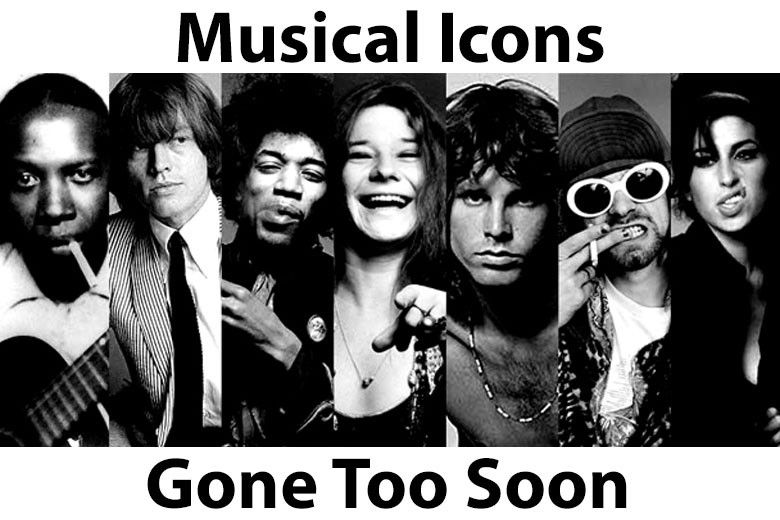
Club 27 is a term that describes a group of musicians and artists who passed away at the age of 27. This group, surrounded by mystique and intrigue, includes some of the most influential figures in modern music history. Known for their groundbreaking contributions to music and culture, these artists captured the hearts of fans around the world and left behind rich legacies. The following article explores the lives and careers of these talented individuals, whose profound impact on music and culture endures today.
The Artists of Club 27: Legends Who Defined Generations
1. Robert Johnson - Blues Guitarist and Vocalist - May 8, 1911 - August 16, 1938. Known as the “King of the Delta Blues,” Johnson is revered for his guitar skills and unique style, foundational to blues and rock music.
2. Brian Jones - Multi-instrumentalist, The Rolling Stones - February 28, 1942 - July 3, 1969. A founding member of The Rolling Stones, Jones brought a blues edge and instrumental creativity to the band’s early sound.
3. Jimi Hendrix - Guitar Virtuoso and Songwriter - November 27, 1942 - September 18, 1970. Hendrix transformed rock music with his innovative guitar techniques and memorable performances, becoming one of the greatest guitarists in history.
4. Janis Joplin - Soulful Rock Singer - January 19, 1943 - October 4, 1970. Joplin’s emotive voice and magnetic stage presence made her an icon of psychedelic rock and blues.
5. Jim Morrison - Lead Singer of The Doors - December 8, 1943 - July 3, 1971. Known for his poetic lyrics and captivating persona, Morrison helped shape the counterculture movement of the 1960s.
6. Kurt Cobain - Lead Singer & Guitarist of Nirvana - February 20, 1967 - April 5, 1994. Cobain’s introspective lyrics and raw energy in Nirvana’s grunge anthems redefined rock in the 1990s.
7. Amy Winehouse - Jazz and Soul Singer - September 14, 1983 - July 23, 2011. With her powerful voice and confessional songwriting, Winehouse became a modern-day jazz legend.
These musicians not only shared the same age of death but were each known for groundbreaking contributions to music, often carrying a rebellious edge that defined a generation.
Robert Johnson: The King of the Delta Blues
Robert Johnson was born in Hazlehurst, Mississippi, on May 8, 1911, into a life marked by poverty and hardship. Growing up in the heart of the Mississippi Delta, a region deeply steeped in blues music, Johnson was drawn to the sounds and emotions that defined the genre. His early years were tumultuous, with Johnson frequently moving and facing obstacles from an early age. He was passionate about music, often practicing guitar for hours on end. His dedication led him to develop an extraordinary talent, particularly in his ability to combine intricate guitar work with haunting, soulful vocals.
Johnson’s career was brief, recording only 29 songs in 1936 and 1937. These songs, such as “Cross Road Blues” and “Sweet Home Chicago,” would go on to influence countless artists across blues, rock, and even modern genres. Legends around Johnson’s life emerged over time, with the most famous being that he had “sold his soul to the devil” at a crossroads to gain his musical talent. This myth, combined with his mysterious personality, made Johnson an almost mythical figure in blues history.
He traveled the southern United States playing in juke joints and bars, slowly building a following with his electrifying performances. Although he never gained widespread fame during his life, Johnson’s innovative playing techniques would later inspire blues legends like Muddy Waters, Eric Clapton, and Keith Richards of The Rolling Stones. His life may have ended early, but Johnson's music lives on, continuing to inspire generations of musicians.
Johnson died on the 16th August 1938, reportedly from poisoning, though no official autopsy was conducted. His life and legacy continue to fascinate and mystify music fans worldwide.
Click HERE for our Blog Post on Robert Johnson
Brian Jones: The Wild Spirit of The Rolling Stones
Born in Cheltenham, England, on February 28, 1942, Brian Jones grew up in a middle-class family. He showed an early aptitude for music, mastering multiple instruments, including guitar, piano, and saxophone, which allowed him to explore various musical styles. Inspired by American blues musicians like Muddy Waters and Elmore James, Jones envisioned a band that would bring the blues to British audiences. In 1962, he co-founded The Rolling Stones and played a pivotal role in shaping their early sound, particularly with his slide guitar technique and harmonica playing.
Jones was known for his rebellious nature and distinctive sense of style, often dressed in flamboyant clothing that made him a recognizable figure in London’s vibrant 1960s music scene. His musicianship and stage presence added an experimental edge to the Stones, helping them stand out among the British bands of the time. Key tracks like “Paint It Black” and “Ruby Tuesday” featured his instrumental creativity, making these songs memorable and establishing the Stones as a pioneering force in rock.
Despite his talent, Jones’s personal life became increasingly troubled as he struggled with fame and addiction. Known for his romantic entanglements and high-profile friendships, Jones had relationships with Anita Pallenberg and Suki Potier, and he became part of the London art scene. By 1969, conflicts with his bandmates and his declining health led to his departure from the Stones. Despite these challenges, his contributions to the band's early sound remain vital to their legacy. His experimental style helped lay the groundwork for the evolution of rock music, and he is remembered as one of rock’s original wild spirits.
On July 3 1969, he was found dead in his swimming pool. Officially ruled an accidental drowning, rumours persist of foul play, with many theories about the circumstances of his death.
Click HERE for our Blog Post on Brian Jones
Jimi Hendrix: The Guitar Virtuoso
Jimi Hendrix, born November 27, 1942, in Seattle, Washington, was raised in a modest home, facing challenges as his parents separated and he struggled financially. From a young age, Hendrix found solace in music, teaching himself to play a one-stringed ukulele before eventually upgrading to a guitar. After a brief stint in the army, he began performing in small clubs and gained recognition for his exceptional guitar skills. His life changed dramatically in 1966 when he moved to London, where his talents quickly caught the attention of musicians and producers alike.
His career took off with the release of his debut album, Are You Experienced, which included iconic tracks like “Purple Haze” and “Hey Joe.” Hendrix’s unparalleled use of feedback, wah-wah pedals, and distortion techniques made him a guitar virtuoso who revolutionized rock music. Following his success in the UK, Hendrix returned to the US, where his fame skyrocketed, especially after his groundbreaking performance at the 1969 Woodstock Festival, where he played an unforgettable rendition of “The Star-Spangled Banner.”
Offstage, Hendrix was known for his gentle demeanour, artistic spirit, and bohemian lifestyle. He formed close friendships with fellow musicians and became romantically linked with Kathy Etchingham and Devon Wilson, relationships that were both tumultuous and inspiring for his art. Despite his relatively short career, Hendrix’s influence on guitarists and rock musicians is immeasurable, and his legacy endures as a pioneer who pushed the boundaries of what rock could be.
In the early hours of September 18, 1970, Hendrix died of asphyxiation due to a drug overdose. His death was ruled accidental, but the details remain murky, fuelling speculation and adding to the Club 27 legend.
Click HERE for our Blog Post on Jimi Hendrix
Janis Joplin: The Queen of Psychedelic Soul
Janis Joplin was born on January 19, 1943, in Port Arthur, Texas, a small conservative town where she often felt like an outsider. Drawn to music from a young age, Joplin idolized blues singers like Bessie Smith and Lead Belly and was determined to find her own voice. After briefly attending college, she moved to San Francisco, where she joined Big Brother and the Holding Company and quickly became a sensation in the city’s thriving counterculture scene.
With her powerful, gritty voice, Joplin delivered unforgettable performances on tracks like “Piece of My Heart” and “Summertime,” her raw emotion making her stand out as a unique and influential figure in rock. She became one of the first female rock stars, breaking barriers with her unapologetic stage presence and authenticity. Her solo career took off with the release of I Got Dem Ol’ Kozmic Blues Again Mama! and later Pearl, which included the posthumous hit “Me and Bobby McGee.”
Joplin’s relationships with her bandmates, friends, and family were close but often complicated. Known for her big heart and free spirit, she was both a beloved friend and a misunderstood figure. Despite her success, she struggled with self-doubt and often turned to alcohol and drugs to cope. Joplin’s short career has left an indelible mark on rock, her voice a powerful symbol of self-expression and raw emotion that resonates even decades later.
On October 4, 1970, Joplin was found dead in her hotel room, having an accidental drug overdose. Her passing marked a profound loss for rock music and added another name to Club 27.
Click HERE for our Blog Post on Janis Joplin
Jim Morrison: The Lizard King
Jim Morrison was born on December 8, 1943, in Melbourne, Florida, and grew up in a military family that frequently moved. Morrison was highly intelligent and interested in literature, philosophy, and poetry from a young age. After attending UCLA, where he studied film, he met keyboardist Ray Manzarek, and together they formed The Doors. Morrison’s dark, poetic lyrics and enigmatic presence captivated audiences, and The Doors quickly rose to fame with songs like “Light My Fire” and “Break On Through (To the Other Side).”
Morrison’s fascination with the mystical and existential shaped both his writing and his onstage persona, leading him to earn the nickname “The Lizard King.” Known for his unpredictable behavior and hypnotic performances, Morrison was a central figure in the 1960s counterculture movement, and his lyrics explored themes of freedom, death, and transcendence. His complex personality made him both a star and a source of controversy, and he often clashed with law enforcement due to his provocative performances.
Morrison had a long-term relationship with Pamela Courson, whom he considered his soulmate. Their relationship was both passionate and turbulent, and she inspired much of his work. His life was marked by a deep artistic drive, and he explored his creativity through poetry and film. His influence continues to be felt in music and literature, and he remains a symbol of the rebellious spirit of rock and roll.
On July 3, 1971 he was found dead in his bathtub. No autopsy was conducted, and the cause of death was listed as heart failure, though speculation about drugs and alcohol surrounds his final days.
Click HERE for our Blog Post on Jim Morrison
Kurt Cobain: The Voice of a Generation
Kurt Cobain was born February 20, 1967, in Aberdeen, Washington, a small logging town with limited opportunities. Cobain found an outlet in music, learning guitar and drawing inspiration from bands like Pixies, Melvins and Black Flag. In 1987, he formed Nirvana with bassist Krist Novoselic, and the band quickly made waves in Seattle’s burgeoning grunge scene. The release of Nevermind in 1991 propelled Cobain and Nirvana to global fame, largely due to the success of “Smells Like Teen Spirit.”
Cobain’s introspective lyrics and unique sound redefined rock in the 1990s, with songs like “Come As You Are” and “Lithium” capturing the alienation and angst of Generation X. He became an icon, but Cobain struggled with the pressures of fame and his own personal challenges. His marriage to musician Courtney Love was heavily publicized and complicated, but together, they had a daughter, Frances Bean Cobain.
Cobain’s sensitive, artistic nature made him a beloved figure, but he was also deeply conflicted about his fame and struggled with chronic pain and addiction. His music remains a powerful statement of self-expression and honesty, solidifying him as a voice of a generation whose legacy continues to inspire.
On April 5, 1994, Cobain died from a self-inflicted gunshot wound. His tragic end shocked the music world, and Cobain became an enduring symbol of the tortured artist within Club 27.
Click HERE for our Blog Post on Kurt Cobain
Amy Winehouse: The Queen of Modern Jazz
Amy Winehouse was born in London, England, on September 14, 1983, and showed a deep love for jazz from a young age. Growing up in a family with musical influences, she was drawn to jazz greats like Dinah Washington and Sarah Vaughan. Her distinctive contralto voice and unique fusion of jazz, R&B, and soul made her stand out. Her debut album, Frank, was met with acclaim, but it was her second album, Back to Black, that launched her to global stardom, with hits like “Rehab” and “Back to Black.”
Winehouse’s raw, confessional songwriting resonated with fans and critics, earning her five Grammy Awards and cementing her place as a modern jazz and soul icon. Known for her bold fashion, vintage beehive hair, and tattoos, Winehouse became as much a cultural icon as a musical one. Her relationships, especially with Blake Fielder-Civil, were often tumultuous and influenced her music, creating a deeply personal and raw style.
Her struggles with addiction and personal hardships were widely covered by the media, yet her music remained authentic and heartfelt. Winehouse’s voice and songwriting left an enduring impact on jazz and pop music, making her an icon whose influence extends well beyond her years.
On July 23, 2011, Winehouse was found dead in her home from alcohol poisoning, joining the ranks of Club 27 and leaving fans mourning her lost potential.
Click HERE for our Blog Post on Amy Winehouse
The Enduring Legacy of Club 27
The artists of Club 27 shared more than just their age at the time of their passing; they shared a dedication to their craft that pushed boundaries, defied norms, and created timeless music. Each of these individuals had a unique voice and perspective that shaped not only their genre but the world of music as a whole. Their lives were marked by both triumphs and challenges, and their work continues to inspire and influence new generations.
These legends may have left us too soon, but their legacies live on. The music, stories, and cultural impact they left behind have made them immortal in the hearts of fans worldwide. Eyesore Merch proudly celebrates the music of Club 27 with 100% official merchandise to honour their contributions and keep the spirit of their artistry alive.