
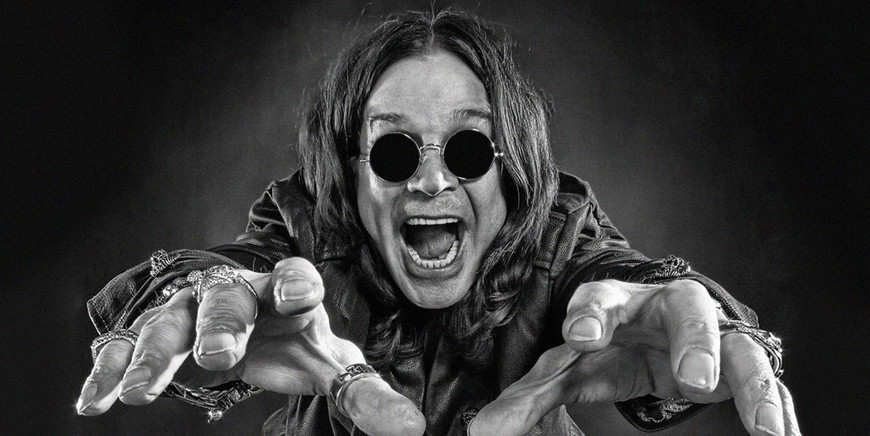
The Legacy of Ozzy Osbourne: Prince of Darkness and Heavy Metal Icon
John Michael “Ozzy” Osbourne (3 December 1948 – 22 July 2025) left behind a legacy like no other. A working-class lad from Birmingham who became the voice of a generation, Ozzy didn’t just help invent heavy metal—he embodied it. As the voice of Black Sabbath and later as a multi-platinum solo artist, he brought darkness, drama, and soul to a genre that would shape music for decades. His unmistakable voice, chaotic stage presence, and defiant resilience made him a legend—not just in metal, but across music and pop culture.
Before the Music: From Aston to Icon
Born in Marston Green and raised in the industrial suburb of Aston in Birmingham, Ozzy's early life was far from glamorous. He struggled with severe dyslexia and a turbulent family life, often finding comfort in music and mischief. His teenage years were marked by small-time crime, which even led to a brief stint in a youth correctional facility. It was during this time that music became a lifeline. Inspired by The Beatles—particularly their song "She Loves You"—Ozzy realised he wanted to be a singer. That moment sparked the fire that would one day lead him to global fame.
Black Sabbath: The Birth of Heavy Metal
In 1968, Ozzy joined forces with guitarist Tony Iommi, bassist Geezer Butler, and drummer Bill Ward to form Black Sabbath. Initially called Earth, they changed their name to Black Sabbath after a Boris Karloff horror film, reflecting their fascination with the occult and the dark side of life.
Their self-titled debut album, Black Sabbath, released in 1970, is widely regarded as the birth of heavy metal. Its thunderous riffs, doom-laden lyrics, and Ozzy's haunting vocals created something that the world had never heard before. Later that same year, they released Paranoid, which contained the now-iconic songs "War Pigs", "Iron Man", and the title track "Paranoid". This album propelled them into global stardom.
They followed it up with a string of influential records including Master of Reality (1971), Vol. 4 (1972), Sabbath Bloody Sabbath (1973), Sabotage (1975), Technical Ecstasy (1976), and Never Say Die! (1978). However, by the late ’70s, the band was fracturing under the weight of substance abuse and creative tensions. In 1979, Ozzy was fired from Black Sabbath—a moment that could have ended a lesser artist's career.
Decades later, however, the original lineup reunited for a string of historic live performances and even a full-length album, 13, released in 2013, with Ozzy once again on vocals. Their final concert together took place in their hometown of Birmingham in 2017—a full-circle moment for the godfathers of metal.
The Solo Years: The Blizzard Begins
Ozzy's solo career began explosively with the release of Blizzard of Ozz in 1980. The album featured guitarist Randy Rhoads, whose neo-classical style and jaw-dropping technique brought a fresh and vital energy. Songs like "Crazy Train", "Mr. Crowley", and "Suicide Solution" became instant classics. Tragically, Rhoads died in a plane crash in 1982, a loss that devastated Ozzy and his fans alike.
Despite this tragedy, Ozzy pressed on. He released Diary of a Madman (1981), another landmark album, and followed it with Bark at the Moon (1983), The Ultimate Sin (1986), No Rest for the Wicked (1988), No More Tears (1991), and Ozzmosis (1995). Each album saw Ozzy working with some of the finest musicians in the genre, including Zakk Wylde, Jake E. Lee, Bob Daisley, and Lemmy Kilmister, who co-wrote songs like "Mama, I'm Coming Home" and "Hellraiser".
In the 2000s, Ozzy continued to evolve. Down to Earth (2001) included the ballad "Dreamer", showing a more introspective side. Black Rain (2007) and Scream (2010) followed, both of which featured modern production and a new generation of musicians. In his later years, Ozzy released Ordinary Man (2020), featuring guests like Elton John, Slash, and Post Malone, and Patient Number 9 (2022), which included contributions from Eric Clapton and Jeff Beck.
Throughout his solo career, Ozzy produced dozens of timeless tracks. "Bark at the Moon", "Shot in the Dark", "No More Tears", and "I Don’t Wanna Stop" all proved that the Prince of Darkness could consistently deliver. His voice remained instantly recognisable—part wail, part whisper, always raw with emotion.
The Osbournes and Pop Culture Phenomenon
In 2002, Ozzy reached a whole new audience as the star of The Osbournes, a reality TV show that aired on MTV. The show followed Ozzy, his wife Sharon, and their children Kelly and Jack, offering a chaotic but heartfelt look at their family life. The world saw a different side of the metal icon—bumbling, funny, vulnerable, and full of love for his family. The show was a massive success, making Ozzy an unexpected household name beyond rock circles.
This unexpected popularity led to even more public appearances, voiceovers, and media projects. He became the face of everything from Super Bowl ads to animated cameos and co-created Ozzfest, the touring festival that became a proving ground for up-and-coming metal acts throughout the 2000s.
Ozzy and his son Jack also starred in Ozzy & Jack’s World Detour, a travelogue-meets-history show that further cemented their bond and gave fans more insight into Ozzy’s personality beyond the stage.
Health Battles and Farewell Appearances
In 2019, Ozzy revealed that he had been diagnosed with Parkinson's disease, and in the following years he faced multiple surgeries and setbacks. Despite being in visible pain, he never gave up. Though his live performances became less frequent, he always expressed his desire to return to the stage one last time.
That opportunity came in July 2025, at the monumental Back to the Beginning concert in Birmingham, where Ozzy performed what would become his final concert. Backed by original Black Sabbath bandmates and supported by artists like Metallica, Tool, Slayer and Pantera, Ozzy performed seated but powerful. The concert, streamed globally, raised millions for Parkinson’s research and children’s hospices. It was his final gift to his fans and to the city that raised him.
A Final Goodbye
On 22 July 2025, Ozzy Osbourne passed away peacefully at the age of 76. Tributes poured in from around the globe. Black Sabbath bandmates Tony Iommi, Geezer Butler, and Bill Ward mourned their brother. Stars like Elton John, Jack White, and Alice Cooper paid homage. The rock community—fans and musicians alike—honoured Ozzy not just for his music, but for his spirit, humour, and resilience.
He wasn’t just the voice of metal—he was its soul.
Celebrate Ozzy’s Legacy with Eyesore Merch
At Eyesore Merch, we’re proud to carry one of the most comprehensive ranges of official Ozzy Osbourne and Black Sabbath merchandise in the UK. Whether you’re looking for classic album tees, patches, posters, vinyl records, or limited-edition items celebrating his final performances, we’ve got you covered.
Browse our collection and honour the life of the Prince of Darkness with the real deal—100% official merch delivered fast, with rewards through our Eye Points programme.
Ozzy may be gone, but his music—and his legacy—will live forever.