
How Music Pre-Orders Actually Work
This is a guide to how Music Pre-Orders actually work. To be fair this can be applied to Pre-Orders everywhere, Computer Games, Records, Films etc, you've just got to keep in mind that Computer Games don't get stamped in a vinyl pressing plant and as such don't have exactly the same problems to contend with, but they will have a whole host of their own issues.
Any way, I'm rambling, this article is aimed at Pre-Orders for physical items within the music indistry, such as records and CDs, and exclusive merch that sometimes goes with a new release. But the basic frame work applies to any Pre-Order for anything.
"The latin prefix “PRE” means “before” and “order” is the action that you just did. You ORDERED BEFORE the release date. That means, you purchased or are about to purchase a record or sweet, exclusive bundle that has a street date in the future. This means you will not have your order shipped until the week leading up to the release date. This date varies by product and will be on the item description page, and on your order confirmation email. We will not ship until the week leading up to the release date so please be aware of what this date will be. Postage options may prevent you from getting your order exactly on release date, but we will ship ON or BEFORE the release date." - Metal Blade Records
The Most Important Point
A release date is the scheduled date on which a product is officially released. It is not necessarily the date on which every retailer receives their stock or every customer receives their order.
Pre-ordering is a great way to secure forthcoming releases, particularly limited-edition vinyl, collectible box sets and special editions. However, there are a number of processes that need to take place between an album being announced and the finished product arriving at your door.
Understanding how these processes work can help explain why pre-orders are such an important part of the music industry, why release dates occasionally change and why availability can differ from one retailer to another.
What Actually Is a Pre-Order?
A pre-order allows you to purchase a product ahead of its scheduled release, often before the finished product has even been manufactured.
When an artist or record label announces a new album, reissue or special edition, retailers are usually provided with product information, artwork, format specifications, pricing and an anticipated release date.
This information allows retailers to make the product available to customers in advance of receiving their physical stock.
Pre-orders can be announced several months ahead of release or, occasionally, just a few days beforehand. Much depends on the artist, the record label, the nature of the release and the marketing campaign surrounding it.
At Eyesore Merch, our Music Pre-Orders include forthcoming vinyl records, CDs, cassettes, deluxe editions, box sets and, where available, music and merchandise bundles.
A pre-order does not mean that the retailer already has the product sitting in their warehouse. In many cases, the retailer is taking orders based on information and expected stock quantities provided by the record label or distributor.
Why Does the Music Industry Use Pre-Orders?
Pre-orders are an important part of the commercial and promotional infrastructure of the physical music industry.
For the artist, they help build anticipation around a release. A new album might be announced alongside a single, music video, forthcoming tour or festival appearance, with the pre-order campaign forming part of a much bigger promotional strategy.
For record labels and distributors, pre-orders can provide an early indication of demand, helping to inform production quantities, stock allocations and distribution plans.
For retailers, they provide an opportunity to assess customer interest and manage incoming stock requirements.
For music fans, they offer an opportunity to secure something they are looking forward to, particularly when the product is being manufactured in limited quantities.
Unlike digital music, where an effectively unlimited number of people can access the same recording, physical music needs to be manufactured, packaged, stored and transported. Every copy of a record, CD or cassette needs to exist as an individual physical product.
That fundamental difference is one of the reasons pre-orders are particularly important to the physical music industry.
From Album Announcement to Your Record Collection
It is easy to imagine that an artist finishes recording an album, sends it off to be manufactured and the finished records appear in shops on release day.
In reality, the process can involve numerous independent businesses, potentially operating across several different countries.
An album recorded in the UK might be mastered elsewhere, pressed at a manufacturing plant in mainland Europe, packaged using components produced by another supplier and distributed through several regional distribution networks before reaching a retailer.
Some independent artists and record labels manage much of this process themselves. Others work with specialist businesses responsible for individual stages of production and distribution.
Every release is different, but a typical physical music supply chain might look something like this:
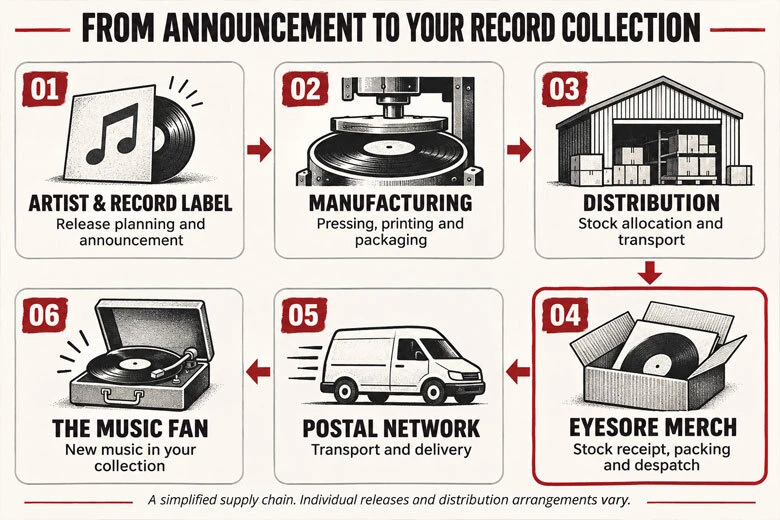
1. The Artist and Record Label
The artist and record label establish the release schedule, the formats that will be available, the artwork and any special editions that are planned. This is generally where the release announcement originates.
2. Manufacturing
Specialist manufacturers produce the physical products. This can include vinyl pressing plants, CD manufacturers, cassette manufacturers, printers and packaging suppliers. Each component needs to be manufactured to the required specification before the finished product can be assembled.
3. Distribution
Finished products enter the distribution network. Distributors manage stock allocations, warehousing and the movement of products to retailers across different countries and territories. Not every retailer necessarily receives its stock from the same distributor.
4. The Retailer – Eyesore Merch
This is where we generally enter the physical supply chain. Having already made the product available for pre-order, we receive the finished stock, check incoming deliveries, allocate products to customer orders and prepare them for despatch.
5. Postal and Delivery Services
Once an order has been packed and despatched, it enters the postal or courier network for delivery to the customer.
6. The Music Fan
The finished product arrives, the packaging comes off and the music goes on!
Although the process looks relatively straightforward when presented like this, each stage has its own commercial pressures, production schedules and logistical challenges.
Manufacturing Physical Music
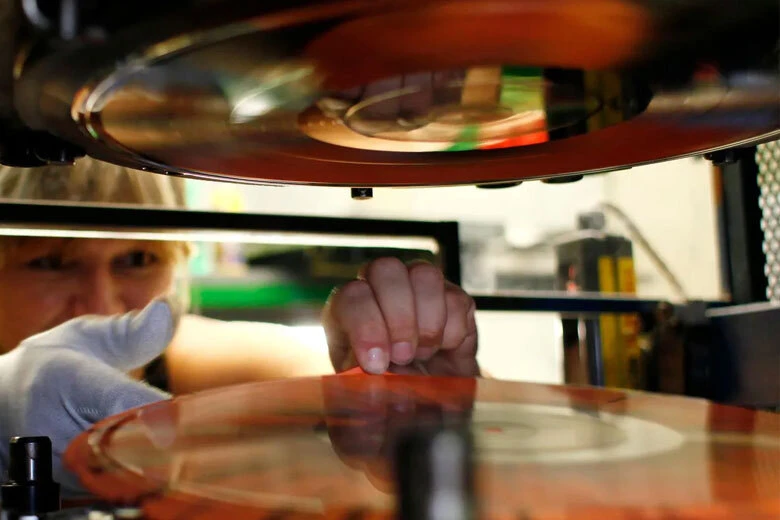
Manufacturing a vinyl record is a considerably more involved process than many people realise.
Before a record can be pressed, the audio needs to be prepared for vinyl production. Depending on the manufacturing method, this can involve cutting a master, producing metal stampers and manufacturing test pressings for approval.
Once approved, the production run can begin.
Alongside the records themselves, there may be numerous other components that need to be produced:
- Printed outer sleeves and gatefold packaging.
- Inner sleeves and lyric sheets.
- Centre labels.
- Booklets, posters and art prints.
- Special-edition packaging and box sets.
- Additional merchandise included in a bundle.
These components are not necessarily manufactured by the same business or in the same location.
A pressing plant might have completed the entire production run of a record but still be waiting for the printed sleeves to arrive. Alternatively, the packaging might be ready whilst the records themselves are awaiting approval or production.
CDs and cassettes have their own manufacturing processes and, although these can sometimes have shorter production lead times, they are not immune to similar issues.
The finished product is only ready when all the necessary components have come together.
Why Do Music Pre-Order Release Dates Sometimes Change?
Release dates are generally established well in advance, often whilst manufacturing is still being planned or is already underway.
Although the businesses involved work towards these dates, physical manufacturing and international logistics are not always entirely predictable.
Some of the reasons a release might be delayed include:
Manufacturing Schedules
Pressing plants and other manufacturers work with numerous record labels and artists simultaneously. Production delays elsewhere in their schedules can have a knock-on effect on forthcoming releases.
Quality Control
Test pressings or finished products may not meet the required standard. In some circumstances, part or all of a production run may need to be manufactured again.
Artwork and Packaging
Delays in artwork approval, printing or the manufacture of specialist packaging can prevent otherwise finished products from being assembled.
Transport and Logistics
Physical products need to move between manufacturers, record labels, distributors and retailers. International freight delays, customs inspections and other transport issues can affect this process.
Commercial Decisions
An artist or record label may decide to revise a release schedule for promotional, creative or commercial reasons.
A delay can originate at almost any point in the supply chain, and information about that delay may take time to filter through to the businesses further down the line.
Occasionally, retailers may only become aware of a problem shortly before the anticipated release date.
An Official Release Date and Stock Availability Are Not Always the Same Thing
One of the more confusing aspects of physical music releases is that an album can be officially released without every retailer having received their stock.
An album might be available to stream, copies might already have appeared in record shops and some customers might have received their pre-orders, whilst other retailers are still awaiting deliveries.
This does not necessarily mean that a retailer has forgotten to order the stock or that something has gone wrong with an individual customer's order.
Different retailers can receive products through different distribution networks. Some may purchase directly from a record label, whilst others receive their stock through national or regional distributors.
Different editions of the same album may also be manufactured in different locations or arrive at different times.
For example, the standard CD edition of an album might be available on its original release date, whilst a particular coloured vinyl edition has been delayed.
In this situation, the official release date of the album itself may remain unchanged, even though the availability of a specific physical edition has been affected.
It is therefore useful to distinguish between four separate things:
| Term | What It Means |
|---|---|
| Release Date | The scheduled date for the official release of a product. |
| Stock Availability | When the physical product becomes available to a particular retailer. |
| Despatch Date | When the retailer sends the customer's order. |
| Delivery Date | When the order arrives with the customer. |
Ideally, all four work together in such a way that the customer receives their pre-order on release day. However, they are separate stages of the process.
Limited Editions, Coloured Vinyl and Stock Allocations

One of the most exciting aspects of collecting physical music today is the sheer variety of editions available.
Alongside standard black vinyl and traditional CD releases, record labels regularly produce coloured vinyl, picture discs, anniversary editions, expanded reissues, deluxe box sets and other collectible formats.
Some releases are manufactured in very specific quantities. Others are limited to particular territories, retailers or distribution channels.
A record label might, for example, manufacture 1,000 copies of a particular vinyl variant for worldwide distribution. Those copies may then need to be divided between numerous distributors, retailers and the label's own sales channels.
An individual retailer may therefore only have access to a relatively small proportion of the total production run.
What Is a Stock Allocation?
A stock allocation is the quantity of a particular product that a supplier or distributor makes available to a retailer.
In some cases, retailers can request as many copies as they believe they can sell. In others, quantities are restricted due to limited production runs or high levels of demand.
Occasionally, the final number of copies supplied may be lower than originally anticipated. This can happen because of manufacturing shortages, greater than expected demand or changes to how the available stock is distributed.
This is one of the reasons that particularly desirable releases can sell out before their official release date, and why a retailer may stop accepting pre-orders whilst the product is still several weeks away from release.
Pre-ordering early is generally the best way to improve your chances of securing a particular edition. However, no retailer is entirely immune to unexpected changes in supplier allocations.
You can explore the different physical formats and editions available across our Vinyl Records and wider Music sections.
Where Does Eyesore Merch Fit Into the Process?
As an independent retailer of official music merchandise and physical music, we work with a wide range of record labels, distributors and authorised suppliers.
Some products come from relatively small independent record labels, whilst others come through much larger international distribution networks.
As with the licensed merchandise industry, there is no single supply chain that applies to every artist or release.
We explored the commercial relationships behind licensed band merchandise in our article How Official Music Merchandise Actually Works , and many of the same principles apply to physical music.
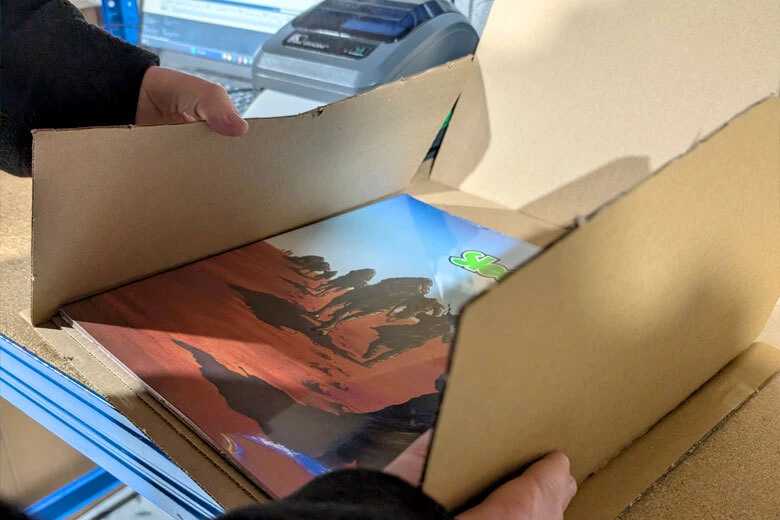
Our role as a retailer involves making forthcoming releases available to customers, managing stock requirements, monitoring information from our suppliers, receiving deliveries and ensuring that customer orders are packed and despatched as efficiently as possible.
Whilst we can manage the processes that take place within our own business, we do not generally control the manufacturing of the products, the official release schedules established by record labels or the international transport networks that bring those products to us.
What we can do is work with our suppliers, communicate the information available to us and prioritise the despatch of any stock that arrives later than anticipated.
Like the people buying from us, many of us are music fans and collectors ourselves. We know the excitement of waiting for a new release, and equally, the frustration when something takes longer than expected to arrive.
How Pre-Orders Work at Eyesore Merch
Whilst the wider music industry operates through a number of different commercial arrangements, we aim to keep the process of purchasing a pre-order from Eyesore Merch as straightforward as possible.
When Is Payment Taken?
Payment is collected when you place your pre-order.
This means that payment has already been completed when the stock arrives, avoiding potential issues with expired cards, failed payments or other payment complications at the point of despatch.
This is particularly useful when products have been made available to pre-order several months ahead of their scheduled release.
When Will My Pre-Order Be Despatched?
Subject to receiving stock from our suppliers in sufficient time, our despatch targets are as follows:
Target despatch ahead of release
Target despatch ahead of release
Despatch targets are subject to stock availability and are not guaranteed delivery dates.
These timescales are intended to give orders the best possible opportunity to arrive with customers for release day.
Once your order has been despatched, you will receive an email notification.
Although we make every effort to achieve release-day delivery, the time an order takes to arrive can be affected by the postal network, weekends, public holidays and, for international customers, customs processing and local delivery services.
Further information about our delivery services can be found in our Shipping & Delivery Policy .
What Happens If I Order Products With Different Release Dates?
When you purchase multiple pre-order products within the same order, we hold the order until all the products are available.
For example, imagine placing an order containing the following three products:
One Order, Three Different Products
An illustrative example of how combined pre-orders are handled.
All three products are despatched together in line with the March release, subject to stock availability.
In this example, the T-shirt is reserved when the order is placed, the vinyl LP is set aside when it arrives, and the complete order is despatched once the CD becomes available for shipment.
This also means that if the release date of the final product is delayed, it can affect the despatch date of the entire order.
Can I Receive My In-Stock Products Sooner?
Yes. If you would like to receive in-stock products or earlier releases without waiting for your other pre-orders, we recommend placing separate orders.
If you have already placed a combined order, it is possible to arrange for available items to be despatched separately. An additional postage charge will apply, equal to the original shipping fee paid at checkout.
Combining products into a single order can be a useful way to reduce the number of separate deliveries, particularly for international customers who are not in a hurry to receive individual items.
However, it is worth considering the release dates of all the products in your basket before completing your purchase.
What Happens If a Release Is Delayed?
If we receive information from our suppliers that the expected release date of a product has changed, the revised date will be displayed on the relevant product page.
If a product arrives later than anticipated, we prioritise the despatch of outstanding pre-orders once the stock is received.
Our full Pre-Order Policy provides further information about payments, despatch, combined orders and delayed releases. Nothing in this article affects your statutory consumer rights.
What Is the Difference Between a Pre-Order and a Backorder?
Although the two terms are sometimes used interchangeably, there is an important distinction.
| Pre-Order | Backorder |
|---|---|
| A product awaiting its official release. | An already released product currently unavailable from the retailer's own stock. |
| Usually associated with an anticipated release date. | Usually associated with expected replenishment or supplier availability. |
| May relate to a new album, forthcoming reissue or special edition. | May relate to existing catalogue stock or an additional manufacturing run. |
A backordered product may be available from a supplier, awaiting replenishment or scheduled for another manufacturing run.
A reissue of an older album, however, can still be a pre-order if the specific edition being offered has not yet been released.
For example, an album originally released in 1996 might be receiving a 30th anniversary vinyl pressing. Although the music itself has been available for decades, that particular physical edition is a new release and can therefore be made available for pre-order.
The distinction relates to the availability and release schedule of the specific product, rather than the age of the music itself.
Getting the Most Out of Pre-Ordering
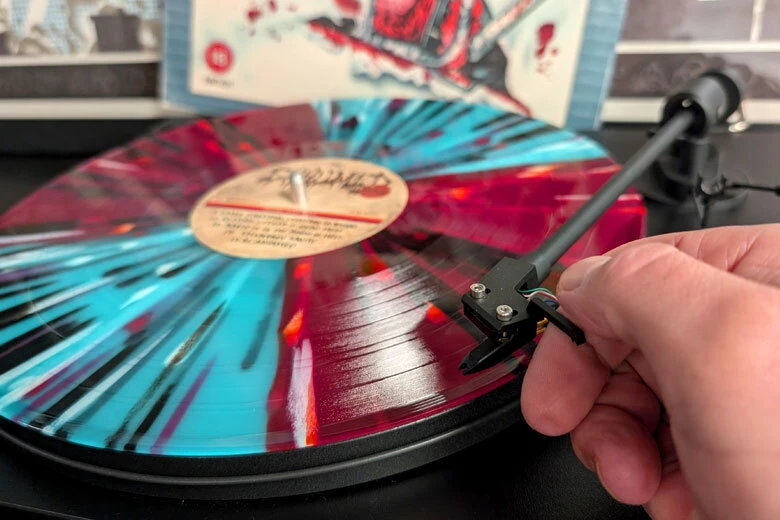
Pre-ordering should ultimately be an exciting part of collecting music.
There are, however, a few things worth bearing in mind when purchasing forthcoming releases.
- Check the specific edition. Different vinyl variants, CD editions and box sets may have different release dates, even when they contain the same album.
- Order limited editions early. Particularly desirable pressings can sell out long before the official release date.
- Check all the release dates in your basket. If you are ordering several products together, consider when the last item is due to become available.
- Be mindful of gifts and special occasions. If you need something for a birthday, Christmas or another specific date, allow for the possibility of a release or delivery delay.
- Consider separate orders. If you want to receive an available product sooner, ordering it separately from your pre-orders is generally the simplest option.
- Check the product page for updates. If a release date changes, the relevant product page is a useful place to find the latest expected release information.
If you are looking for something new without necessarily wanting to wait for a forthcoming release, you can also explore our New Arrivals section, checking the individual product's availability before ordering.
Frequently Asked Questions About Music Pre-Orders
Am I guaranteed to receive my pre-order on release day?
We aim to achieve release-day delivery wherever possible, but this depends on when stock arrives from our suppliers and how long delivery takes. Release-day delivery is not guaranteed.
Why has another retailer received a record before Eyesore Merch?
Different retailers may receive their stock through different suppliers or distribution channels. Deliveries and stock allocations do not necessarily reach every retailer at the same time.
Why is an album available to stream when my vinyl pre-order has been delayed?
Digital and physical music have different production and distribution requirements. An album can be released digitally whilst a particular physical edition is still awaiting manufacture or delivery.
Can a pre-order sell out before release day?
Yes. Limited-edition products and releases with restricted stock allocations can sell out before their official release.
Will my other items be reserved if my pre-order is delayed?
Yes. Other available items within the same order are reserved for you whilst we await the remaining products.
Where can I find the latest expected release date?
The anticipated release date is displayed on the relevant product page. If we are advised of a revised release date, we update that information accordingly.
When do I pay for a pre-order at Eyesore Merch?
Payment is collected when you place your pre-order, rather than when the product is despatched.
What happens if I order several albums with different release dates?
Products purchased together within the same order are held until all items are available for despatch. If you would like to receive earlier releases separately, we recommend placing separate orders.
Can I split an existing pre-order into separate deliveries?
Yes. Available items can be despatched separately, subject to an additional postage charge equal to the original shipping fee paid at checkout. Please refer to our Pre-Order Policy for further information.
The Bottom Line
The physical music industry is a network of artists, record labels, manufacturers, distributors, retailers and logistics businesses, all working to bring music to the people who want to own it.
Pre-orders are an important part of that process.
They help artists and record labels build anticipation for new releases, allow retailers to plan their stock requirements and give music fans the opportunity to secure forthcoming albums and collectible editions.
Whilst manufacturing and distribution do not always go exactly to plan, the vast majority of the work involved takes place behind the scenes, long before a record reaches a turntable or a CD makes its way into a collection.
There is something particularly satisfying about finally getting your hands on a record that you have been looking forward to for weeks or even months. From the artwork and packaging to the first time you play it, owning physical music is an experience that goes beyond simply having access to the recording.
And ultimately, that is what it is all about.
Discover What's Coming Next
From brand-new albums and limited-edition vinyl to anniversary pressings, reissues and deluxe editions, discover the latest forthcoming releases at Eyesore Merch.
Shop Music Pre-Orders Explore All MusicEyesore Merch – By and for the fans.